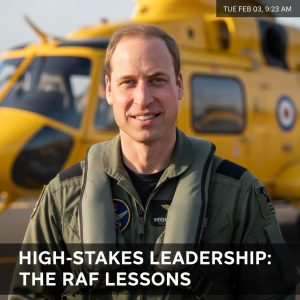
The images of Prince William walking along the windswept, rugged coastline of North Wales recently captured a sentiment that resonates far beyond the British Royal Family. It was more than a nostalgic stroll; it was a return to the “proving grounds.” Long before he was the Prince of Wales, he was Flight Lieutenant Wales, a Search and Rescue pilot for the Royal Air Force (RAF). This chapter of his life, defined by the relentless spray of the Irish Sea and the unforgiving rhythms of military discipline, serves as a masterclass in how early-career routines forge the psychological steel required for high-stakes leadership.
In the world of professional development and self-improvement, we often focus on the “grand moments”—the promotions, the speeches, and the achievements. However, as the Prince’s return to his former station suggests, true resilience is rarely built in the spotlight. It is built in the quiet, often grueling routines of one’s early years. For those looking to navigate their own career transitions or leadership hurdles, the “RAF model” of discipline provides a blueprint for long-term success.
The Foundation of Discipline: Why Routine is Not a Cage
Many young professionals view routine as a stifling force, something that limits creativity or personal freedom. Yet, for an RAF pilot, routine is the very thing that ensures survival. During his tenure at RAF Valley, Prince William’s life was governed by checklists, pre-flight briefings, and maintenance schedules.
In high-stakes environments, the “mundane” tasks are actually the safeguards against chaos. When you embrace a rigorous early-career routine, you are training your brain to perform under pressure. This is known in cognitive psychology as “automaticity.” By mastering the small, repetitive tasks of a job, a leader frees up mental bandwidth to handle the unpredictable crises that inevitably arise.
Revisiting those North Wales shores serves as a reminder that even a future King had to start with the basics. Whether it is a morning routine, a specific way of organizing your digital workspace, or a commitment to daily skill-building, these habits form the bedrock of professional identity. They provide a sense of control when the external environment—much like the Welsh weather—becomes unpredictable.
Resilience in the Face of the Elements
The North Wales coastline is beautiful, but for a pilot, it is treacherous. Low visibility, gale-force winds, and steep cliffs make for a demanding workplace. Prince William’s time there was spent navigating these elements to save lives. This type of environmental pressure fosters a specific kind of resilience: the ability to remain calm while everything around you is in flux.
In the context of self-improvement, we can view our “early-career storms” as necessary stressors. Just as a pilot learns to read the clouds, a rising leader learns to read market shifts or office dynamics. The resilience gained from working in “tough conditions”—whether that means a difficult boss, a high-pressure startup, or a demanding service role—is non-transferable. You cannot buy it; you can only earn it by standing on the “windswept beach” and doing the work.
When the Prince stood on that sand recently, he wasn’t just looking at the water; he was likely remembering the feeling of the controls in his hands during a midnight rescue mission. Those moments of high tension, supported by years of routine training, are what transform an individual into a leader capable of carrying the weight of a nation—or a corporation.
The Identity Shift: From “Self” to “Service”
One of the most profound lessons from the RAF experience is the shift from individual ambition to collective service. In the military, the mission always comes first. For Prince William, this period allowed him to inhabit an identity defined by his utility to others rather than his status.
For anyone seeking personal growth, there is a vital lesson here: the most resilient leaders are those who have grounded their identity in something larger than themselves. When you view your work as a service—to your team, your clients, or your community—your ego becomes less fragile. Failure is no longer a personal indictment; it is a hurdle in the way of the mission.
The quiet years in North Wales, where the Prince and Catherine lived as newlyweds away from the paparazzi, provided the mental space to solidify this sense of service. It was a time of “quiet moments” and “long shifts.” This balance of domestic stability and professional rigor is a life tip that many high-achievers overlook. We need the “quiet shore” to process the “loud missions.”
The Psychology of Returning to Your Roots
Why do we feel the need to return to the places where we struggled? Psychologically, revisiting the site of our early hardships allows us to measure our growth. For the Prince, the beach was a physical marker of how far he has come. It serves as a “grounding” exercise, reminding him that beneath the ceremonial robes and global responsibilities, he is a man who knows how to operate in the cold and the dark.
In your own journey of self-improvement, it is helpful to occasionally “walk down memory lane.” Reflecting on your first job, your first big mistake, or the place where you first felt like a “professional” can reinvigorate your sense of purpose. It reminds you that you have survived the “chilly walks” of the past, which gives you the confidence to face the challenges of the future.
Key Leadership Takeaways from the RAF Model
If we distill the Prince’s experience into actionable advice for modern leadership and self-improvement, three core principles emerge:
-
Master the Checklist: Never be too important for the basics. High-stakes success is built on the mastery of low-stakes routines.
-
Seek Out “Bad Weather”: Do not shy away from difficult assignments early in your career. The “windswept” moments are where your resilience is forged.
-
Build a Private Sanctuary: Just as North Wales provided a haven for the royal couple, ensure you have a space where you are not “the leader,” but simply yourself.
The man standing on the beach in 2024 is the result of the officer who flew the missions in 2011. The transition from a pilot to a senior royal is a testament to the fact that no experience is wasted if it is approached with a spirit of service and a commitment to discipline.
Frequently Asked Questions (FAQs)
Why is early-career routine considered important for leadership?
Routine builds “automaticity,” allowing leaders to handle basic tasks without mental fatigue. This preserves cognitive energy for complex decision-making during crises. It also instills a sense of discipline and reliability that is essential for gaining the trust of a team.
How does nostalgia or “revisiting the past” help in personal growth?
Revisiting formative places allows individuals to reflect on their trajectory. It provides a psychological “reset,” helping to reconnect with core values and original motivations that may have been clouded by current high-pressure responsibilities.
Can resilience be learned, or is it an innate trait?
While some people may have a natural inclination toward resilience, it is largely considered a “muscle” that can be developed. Exposure to controlled levels of stress, such as the demanding environments found in military training or challenging early-career roles, helps build the psychological fortitude needed for later life.
What is the “Search and Rescue” mindset in leadership?
It is a mindset focused on problem-solving, empathy, and rapid response. It requires a leader to assess a situation quickly, rely on their training, and prioritize the safety and well-being of their team or organization above all else.
How can I apply the “RAF model” to a corporate job?
You can apply it by creating strict “SOPs” (Standard Operating Procedures) for your daily workflow, seeking out high-pressure projects to test your limits, and maintaining a clear boundary between your professional “duty” and your personal life to avoid burnout.