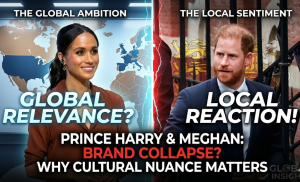
The pursuit of a global personal brand is often heralded as the pinnacle of modern professional success. However, as recent international media developments have shown, there is a razor-thin line between bold ambition and perceived arrogance. When a public figure or entrepreneur attempts to transplant their influence into a new geography without accounting for local sentiment and cultural history, the results can be professionally catastrophic. The recent backlash surrounding high-profile ventures in Australia serves as a masterclass in the risks of “tone-deaf” branding and the critical importance of emotional intelligence in global expansion.
The Psychology of Audacity and Public Backlash
Ambition is a necessary trait for any leader, but when it becomes “audacious” to the point of ignoring reality, it triggers a specific type of public resistance. In the context of the recent controversies involving high-luxury retreats and personal empowerment branding, the primary friction point is the perceived disconnect between the message and the medium. Critics argue that when an individual uses a platform built on tradition—such as royal status—to fuel a commercial empire, the public often views it as a “commodification of identity” rather than a genuine contribution to society.
In Australia, a country known for its “Tall Poppy Syndrome”—a cultural phenomenon where people are criticized for being too successful or self-important—the introduction of an expensive, exclusive luxury retreat was bound to face scrutiny. When the ticket prices reach the thousands, the narrative shifts from “empowerment” to “exploitation.” This serves as a vital lesson for content strategists and brand builders: your price point and your messaging must align with the local economic and social values of your target audience.
The Trap of the Media Machine
One of the most significant criticisms leveled against modern celebrity brands is the “instrumentalization” of relationships. In the specific case of Meghan Markle and Prince Harry, media analysts have pointed out a shift in dynamic that many find unsettling. The perception that a spouse has been transformed into a “media machine” or a “vehicle” for a partner’s fame is a branding nightmare.
For a brand to remain sustainable, it must appear authentic and collaborative. When one person appears to be the “architect” and the other a “tool,” the audience loses trust. This is particularly true when the “tool” in question is a figure who previously commanded respect within a different, more traditional framework. The transformation of a Prince into a celebrity influencer is seen by many as a downgrade in prestige, leading to a “loss of mystery” that once fueled his global appeal.
Cultural Nuance: The Silent Brand Killer
Why did the “dream of Australia” become a potential nightmare? The answer lies in cultural nuance. Australia is a market that prizes authenticity, grit, and a lack of pretension. A high-gloss, luxury-focused wellness retreat marketed by someone seen as an outsider can feel like an intrusion.
When planning a global expansion, a brand must ask:
-
Does this message resonate with the local “soul”?
-
Am I solving a local problem, or am I just looking for a new backdrop for my own promotion?
-
Is my presence here an exchange of value, or a extraction of wealth?
The failure to answer these questions leads to the “arrogant” label that has plagued recent ventures. By ignoring the local sentiment, a brand risks turning potential advocates into vocal critics. In the digital age, where Australian television critiques can go viral globally in seconds, local backlash is never truly “local” anymore; it is a global reputation crisis.
The Sustainability of Luxury Empowerment
The “Her Best Life Retreat” in Sydney was marketed as a beacon of empowerment, yet its $3,000 price tag created a barrier that contradicted the very idea of broad female empowerment. From a self-improvement perspective, true leadership involves accessibility. When empowerment is locked behind a massive paywall, it becomes a “Veblen good”—something purchased primarily to signal status rather than to achieve actual growth.
This strategy might yield short-term financial gains, but it erodes long-term brand equity. For those looking to improve their own professional standing, the lesson is clear: if you want to be seen as a leader in wellness or self-improvement, your primary focus must be the transformation of your audience, not the expansion of your bank account.
The Impact on Personal Relationships and Legacy
The controversy surrounding these moves also highlights the strain that audacious ambition can place on personal relationships. When two people are unified in a brand, but the public perceives a power imbalance, the “marriage brand” suffers. Observers have noted that the constant media spotlight, fueled by aggressive self-promotion, often leaves the more “supporting” partner in a state of perpetual conflict.
For the individual at the center of the storm, the risk is the permanent loss of their original identity. Once you trade “prestige” for “fame,” it is nearly impossible to go back. This is a cautionary tale for any professional: be careful what you sacrifice for the sake of a larger platform. If the institution that made you famous is left behind and ridiculed, the new empire you build will always sit on a shaky foundation.
Lessons in Self-Improvement and Brand Resilience
To avoid the pitfalls of “audacious arrogance,” individuals should focus on these three pillars of self-improvement:
-
Self-Awareness: Regularly audit how your actions are perceived by different cultures. What looks like “boldness” in Los Angeles may look like “hubris” in Sydney or London.
-
Value-First Networking: Build connections based on genuine service. If you enter a new market, start by listening and contributing to local causes before launching a high-priced commercial venture.
-
Strategic Humility: Acknowledge the platforms that gave you your start. Distancing yourself from your roots often looks like ingratitude, which is a major turn-off for global audiences.
Final Thoughts on the Future of the “Markle Brand”
As the Australian retreat unfolds, the world is watching to see if this is a masterstroke of marketing or the beginning of a definitive decline in influence. The stakes are higher than ever because the public has become savvy to the mechanics of the “media machine.” For Meghan Markle, the journey in Australia represents a crossroads. To succeed, she must move beyond the “celebrity influencer” mold and reconnect with a sense of genuine, grounded purpose that transcends the $3,000 ticket price.
The danger of audacious ambition is not in the size of the dream, but in the blindness to the environment in which that dream is planted. Without cultural nuance and respect for local sentiment, even the most polished brand will eventually find itself at odds with reality.
Frequently Asked Questions (FAQs)
What is the “Danger of Audacious Ambition” in branding? It refers to the risk of setting goals that are so self-focused and aggressive that they ignore the social, cultural, and economic realities of the target audience, leading to a public relations backlash and loss of credibility.
Why is cultural nuance important for global personal brands? Every region has different values regarding wealth, success, and celebrity. Ignoring these nuances—such as Australia’s preference for “down-to-earth” personalities—can make a brand appear arrogant and out of touch.
How does “Personal Branding” fail when ignoring local sentiment? When a brand is perceived as purely extractive (taking money/attention without giving back), it alienates the local population. In the digital age, this local alienation quickly becomes a global narrative of failure.
Can a high-priced luxury retreat be considered “empowerment”? While proponents argue that high costs ensure a “high-value” environment, critics often see it as a marketing tactic that prioritizes profit over genuine social impact, especially when the messaging claims to be for “all women.”
How can I improve my own professional branding strategy? Focus on strategic humility, ensure your price points reflect the value provided to the local community, and prioritize authentic collaboration over using others as “tools” for your own growth.